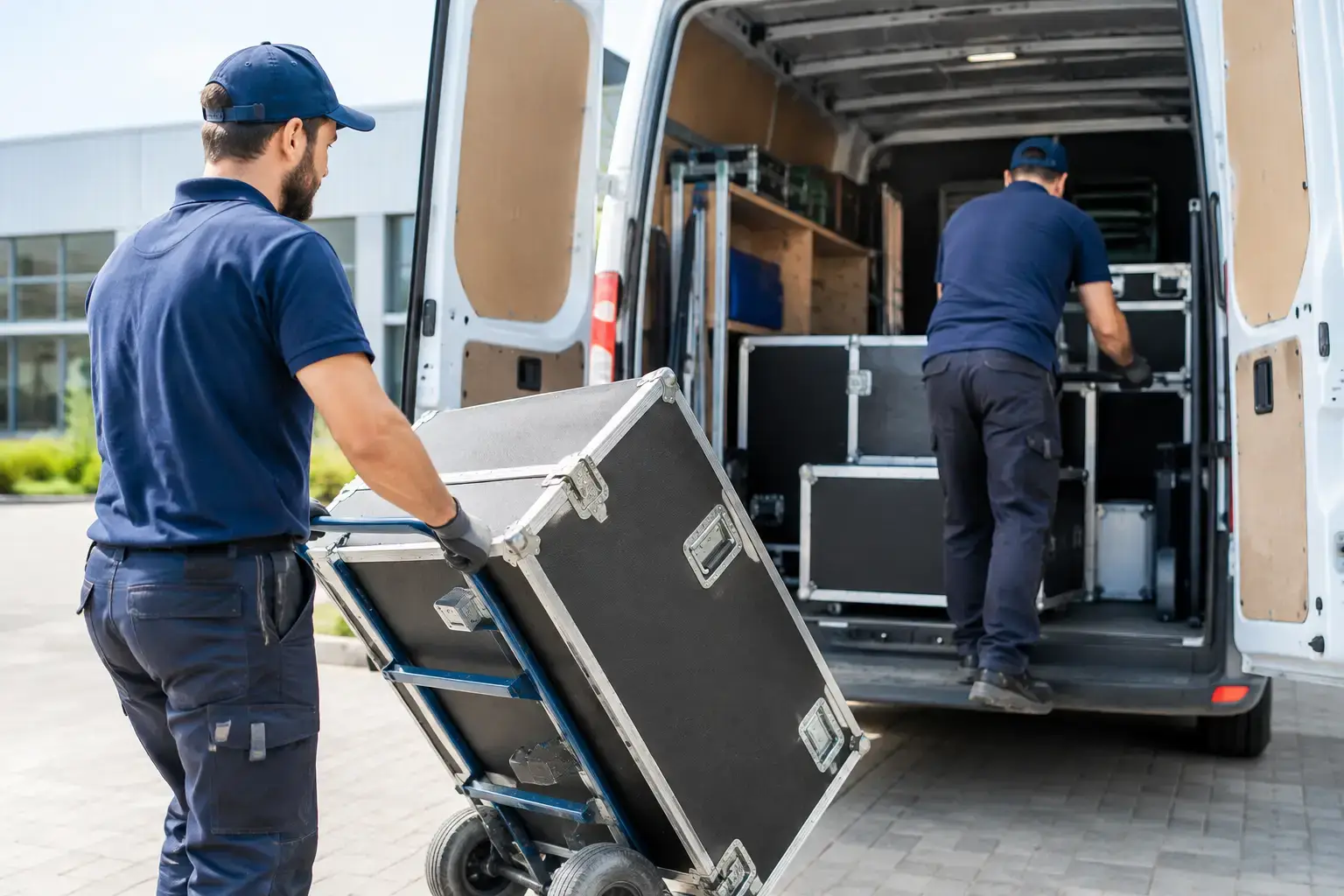
Manual for loading professional equipment
A van can quickly solve the matter of transport, but the correct loading is the one that protects your equipment, driver and timetable. This guide to loading professional equipment is addressed to technicians, workshops, traders, distribution professionals and individuals who need to carry tools, machinery, exhibition material or bulky items without unnecessary delays.
Hasty loading often costs more than the time it seems to gain. A case that moves to the turns, a tool that has not been tied or a van that was unevenly loaded can cause damage, delay in work and risk on the road. With a little preparation, transport becomes safer and simpler.
Select van based on load, not just volume
Before you book a vehicle, calculate exactly what you'll be carrying. It is not enough to know that the equipment fits in length or height. You need to consider the total weight, dimensions of the larger objects, the way in and out of the vehicle and whether they require special temperature or protection.
For tools, scaffolding, spare boxes or workshop equipment, one closed professional van offers weather protection and better organization. For larger machines or pallets, a light truck with a more suitable loading space may be needed. If you carry food, floricultural products or susceptible species, the refrigerator-van is the right choice because the safety of the cargo is also linked to maintaining the right temperature.
Pay particular attention to the vehicle’s payload. The weight of tools, shelves, packaging materials and passengers is added. Don't just count on how crowded the space is. A vehicle overloaded is not properly driven, it charges the tires and makes braking difficult.
Manual for loading professional equipment: preparation
Good loading begins before the rear doors open. Make a brief record of the load and separate the heavy, fragile and objects you will need first at the destination. So you won't have to empty half the van to find a specific tool.
Check the loading area so that it is clean and dry. Remove slipable materials and make sure you carry the appropriate means of restraint. Strap straps, non-slip mats, transport blankets, protection angles and cardboard can make a big difference, especially on sensitive surfaces or equipment with metal parts.
If you are going to load a heavy machine, count in advance doors, ramps, elevators and entrances to the receiving and delivery space. The van may fit the load, but that doesn't mean the load passes through every access. In some cases it takes two people, a carriage cart or a ramp. Don't try to lift your own weight that you don't control safely.
How you correctly place the weight
The basic rule is simple: heavy objects enter low and as close as possible to the front of the loading area. This restricts their movement during braking and better maintains the vehicle balance.
Distribute the weight evenly right and left. If all heavy equipment is on one side, the van can behave differently in the turns and anomalies of the road. Light boxes can only be put over heavy objects when they are stable and are not in danger of being pressed or dropped.
Do not leave gaps between crates, toolboxes or equipment. The blanks allow the cargo to gain momentum. Fill them with protective material, stable boxes or suitable defectors. For objects with a different shape, such as tubes, bases, cables or parts of furniture, first create a fixed base and then complete stacking.
The items you use first must be closer to the doors. This is particularly useful for workshops that make more than one stop in the day. The correct loading order reduces search time and prevents unnecessary unloading on the road or in a customer space.
Tie the load even if the route is short
Distance does not determine the risk. A steep braking, a puddle or a closed turn is enough to move uninsured equipment. Use the available vehicle binding links and tie the heavy objects with appropriate straps.
The straps must be stretched, but without pressing points that may be worn out. Put protective corners or fabric between the strap and sensitive surfaces. Check the buttons before you leave and do a second check after a few kilometers, especially if the load is seated or the roads have severe anomalies.
For long or thin objects such as tubes, profiles and stairs, it needs to be docked at more than one point. Do not just rely on other loads. If they can slip forward, they will move just when you need to brake.
Check the van before you start
After loading is completed, close all doors correctly and make sure nothing prevents their closure. Look at the mirrors if the load limits visibility and arrange the cabin so that there are no items that may roll into the pedals or under the seat.
In driving, keep more distance from the front vehicle and avoid abrupt movements. A loaded van usually needs more space to stop and react differently to the turns. Adjust the speed to the load, weather and route, not only to the permitted limit.
If the transfer involves several deliveries, check the load at each stop. Removing a heavy object can change the weight distribution. You may need to retrace what's left before you continue.
Unloading without damage and injuries
At the destination, park as flat as possible and leave enough space behind or next to the vehicle. Open the doors carefully, especially when there are objects near them. Before you solve the straps, make sure that the load does not rest on them and will not suddenly move.
Unload in reverse order from that load. First the objects that are near the doors, then those that are higher and last the heavy load placed ahead. Do not pull heavy boxes on sensitive surfaces and do not use the van doors as a support for weight.
FAQ for loading
Can I drive a professional van with an amateur license?
Many commercial vans and light trucks are driven with simple category B amateur diploma, if covered by the respective limits . Before booking, confirm the vehicle category and lease conditions.
What do I do if the equipment is too heavy?
Do not choose a vehicle only based on the available volume. Ask for guidance on the appropriate payload and arrange loading with the right means of lifting or carrying. In some cases, two routes are safer and more economical than a overloaded transport.
Do I need a fridge-van for all the food?
It depends on the type, maintenance temperature and duration of transport. For products needed controlled temperature, the refrigerator-van option helps get to their destination correctly.
When the load is properly organized, transport ceases to be the difficult part of the day. Choose the van that fits your work, tie each item as you should and start with the certainty that your equipment will reach where you need it.