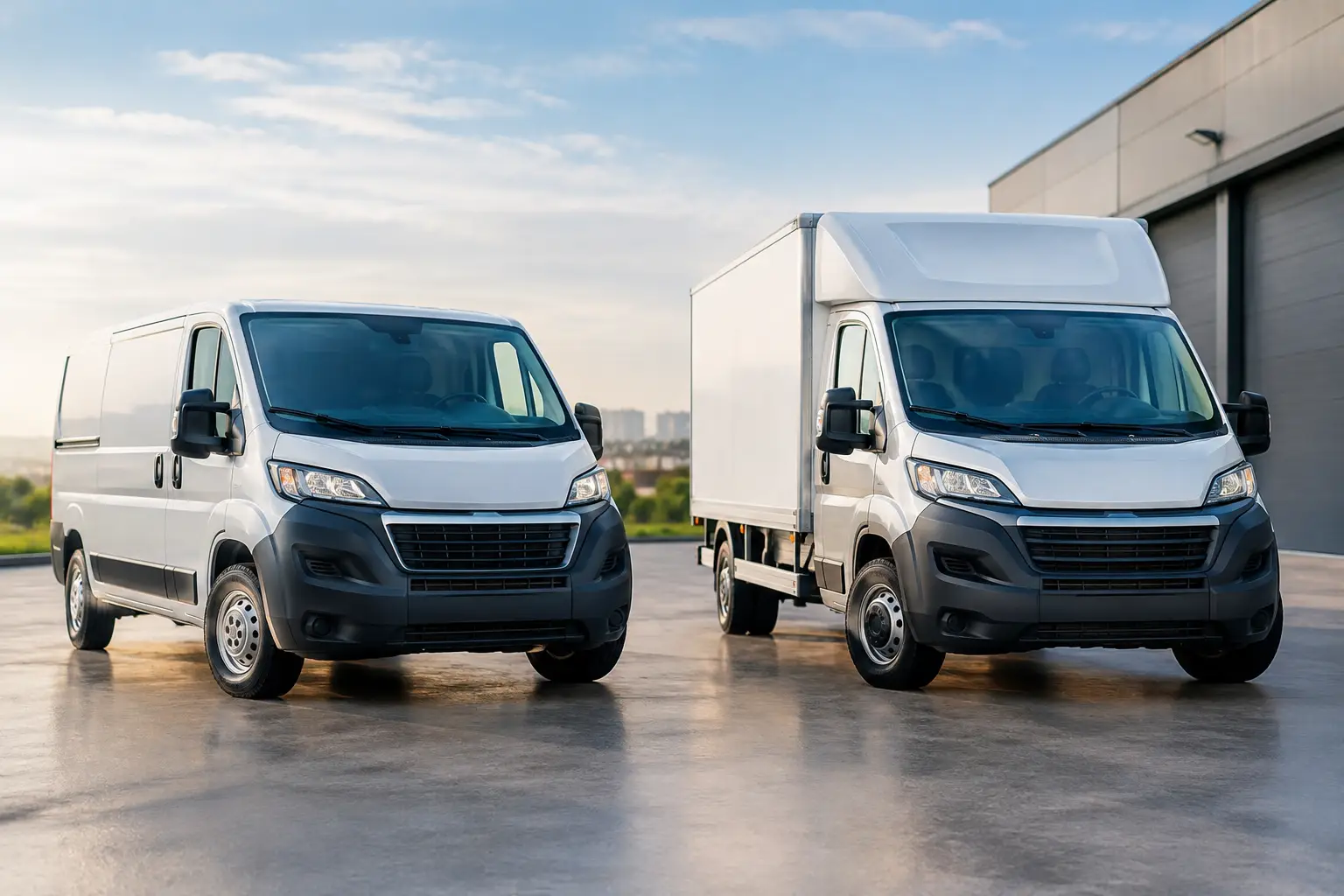
Van or a transport van? What to Choose
A large furniture that does not fit in the car, a move to be made within a weekend or orders that cannot wait: the dilemma «van or transport van» usually occurs when time is pressing. The right choice is not only about how many things fit. It concerns access to the loading area, ease of driving, route, weight and how many times you want to make the same route.
For many drivers, both words simply describe a professional vehicle. In practice, however, there are differences that can make a transfer fast and organized or turn it into pointless routes and delays. Choose from the job you want to get out, not just from the largest vehicle available.
Van or transport van: what's the difference?
The van is a broad category of professional vehicles. It can be compact for small deliveries within the city, medium for equipment and goods or larger for moving and bulky loads. It usually has closed loading space, side sliding door and rear doors for comfortable access.
The transport cage, as often used in everyday language, refers to the closed truck with more «square» and usable space. The roof is taller, the walls more vertical and the space can serve larger items that are not comfortable in a lower van. It is the solution many look for when they have to carry furniture, boxes, professional equipment or work materials.
The boundaries are not always absolute. A large van can comfortably meet many needs you would call «cage», while a small closed business is ideal for regular distributions. That is why the basic question is not the name of the vehicle. It's the actual volume, the dimensions of the load and the way you load it.
Start with the load, not the model
Before choosing a vehicle, count the largest items. It is not enough to calculate the total boxes. A mattress, a refrigerator, a work bench or a large device can determine the height and length you need.
Consider also if the load is stacked. Boxes more easily fill a space up to the roof, while furniture leaves gaps. If you carry tools, shelves or merchandise into different shapes, you need space that allows proper fitting and safe docking. A vehicle that looks large enough on paper may not be practical when the objects do not have the same dimensions.
Weight is just as important. Do not confuse the large space with the possibility of carrying any cargo. The useful loading of the vehicle has a limit and must be calculated especially when carrying tiles, building materials, machinery, beverages or other heavy quantities. If you have any doubt, ask for guidance before booking.
For moving residence
For a studio or a few large markets, a middle van often suffices and moves more comfortably on narrow roads. For Move with lots of furniture, electrical appliances and dozens of boxes, a larger transport cage can significantly reduce the routes.
Calculate the stairs, elevator and distance from the entrance to the parking point. If loading is difficult, choose to have enough space to do less loading and unloading. Do not forget protective blankets, straps and transport carts, especially for sensitive or heavy items.
For professional distribution
If you do daily deliveries in densely populated areas, a compact or middle van can be more practical than a very large cage. He parks easier, passes better from narrow points and helps the driver keep fast pace in his stops.
Instead, when the object of your work requires bulky equipment, large-volume packaging or more orders per route, the largest capacity reduces returns to the warehouse. The right choice depends on the frequency of distributions, not only on the largest order of the week.
For technical workshops and field professionals
Plumbers, electricians, renovation workshops and technicians usually need space for tools, materials and equipment to remain organized. Here, a van with sufficient height and easy access from the side door can prove more functional than an excessively large vehicle.
If you are to carry scaffolding, long materials or heavy machinery, pay particular attention to the length of the loading area and to the beneficial loading. The comfort of the driver matters, but it is the safe fit of the equipment that protects your work every day.
See the route before you book a vehicle
A vehicle can fit all your cargo and still do not fit the route. In the center of Athens, in neighborhoods with narrow roads or in apartment buildings without comfortable space, the external dimensions are of great importance. Check if there are low parking entrances, height restrictions or roads where the temporary stop becomes difficult.
For routes out of town or between warehouses, the largest capacity can be worth more. The same applies when you have limited time and want to complete the transfer on a route. The economy is not only judged by the daily lease. It is also judged by the worker hours, fuel and additional movements you avoid.
Can I drive with an amateur license?
For many categories of van and light trucks up to 3.5 tonnes, the usual amateur is sufficient Category B diploma. This makes hiring practice for both professionals and individuals who want to carry things without needing a driver or a special license.
However, the first time in a transport van needs a little attention. Sit properly, adjust mirrors, familiarize yourself with dimensions and keep longer distances in braking. Take special care at the turns, the rear and when you pass under low points. Driving is not difficult, as long as you do not treat the professional vehicle as a small passenger.
How to choose without paying above
Do not choose the largest vehicle «to be sure» if the load and route do not require it. An oversized vehicle can make parking difficult and increase operating costs. On the other hand, a very small option often costs more eventually when it requires a second or third route.
The most practical solution is to have three information ready: what you carry, how many units or boxes you have and what is the biggest dimension. With these elements you can choose a vehicle category faster and at less risk.
Vstar has options for moving, distributing, professional use and direct replacement of a vehicle, with the option of renting from a few hours to a longer period. If you need a vehicle in a specific space or time, organise the pickup or delivery in time so that the transport starts when needed.
The small details that make a difference
Before you leave, check where to tie the load and how to share the weight. Heavy objects enter low and close to the front of the loading area. The lightest ones are placed on or around them, without being able to move on the route.
Keep free access to what you will need first and do not load objects that restrict visibility from mirrors. With a little organization, the right van or the right transport van is not just a larger space. It is the way to end your transport faster, more certainly and with less suffering.